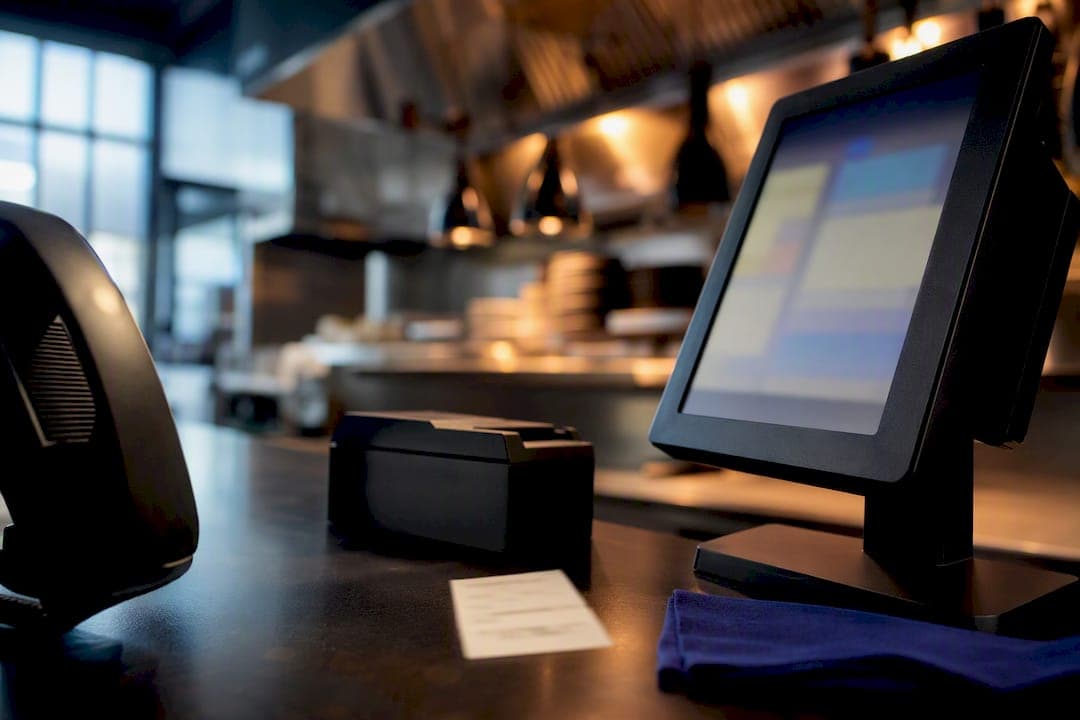
Phone orders can post as real POS tickets using a POS-syncing integration or a direct API, cutting re-entry and missed orders while preserving inventory and modifier fidelity. The right setup routes a live call through capture, parsing, payment, and ticket posting in seconds, without a human retyping anything. The catch is that PCI compliance, menu sync, and business verification all need answers before you flip the switch, not after.
TL;DR:
- Up-to-date menu synchronization and stable API connections are essential to ensure accurate stock levels and prevent selling items that are no longer available.
- Capturing structured order data reduces mistakes, increases ticket accuracy, and allows for prompts that can boost average ticket size through guided upselling.
- Security measures like tokenization and PCI-compliant browser forms are critical to protect payment data and meet compliance standards before going live.
- Running a pilot with a limited menu at one location helps identify configuration issues and ensures staff trust, avoiding widespread failures during full deployment.
- Verifying vendor capabilities on payment handling, operational controls, and ongoing support helps select a solution that minimizes liability and maximizes reliability.
Table of Contents
- How does POS integration for phone orders actually work?
- What operational benefits come from direct-to-POS phone orders?
- What security and technical issues do you need to solve?
- How do you set up and roll out phone-to-POS integration?
- What should you ask before choosing a phone-order POS vendor?
- How Dexcoretechnologies handles phone orders end to end
- What I'd actually prioritize if I were rolling this out
- Ready to stop losing phone orders to voicemail?
- Where to check the technical details yourself
- Sources
- FAQ
How does POS integration for phone orders actually work?
Every reliable phone order integration follows the same basic path from ringing phone to printed kitchen ticket, whether the answering side is a human, an AI receptionist, or a hybrid of both.
- Answer and capture. The call gets picked up, and the caller's order, name, and pickup or delivery details get captured as structured data rather than a scribbled note.
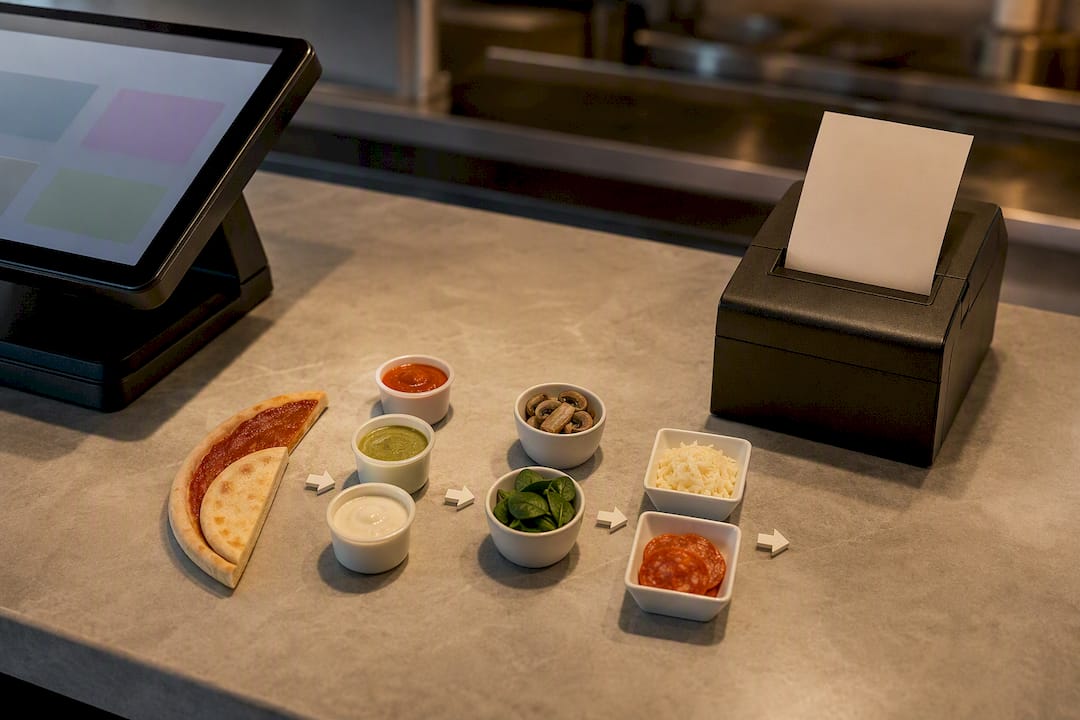
- Parse and normalize. Raw speech or typed shorthand ("large peperoni no cheese") gets mapped to canonical menu items and modifiers so "peperoni" becomes "Pepperoni" with the correct SKU.
- Map to POS. The normalized order gets matched against your point-of-sale system's live menu, including current pricing, combo rules, and 86'd items.
- Payment handling. The system either captures payment on the call, sends a payment link, or flags the order as pay-on-pickup, depending on which method you've configured.
- Ticket and kitchen posting. The finished order lands in the same queue as your walk-in and online orders, with a phone origin tag so staff know where it came from.
The menu sync question is where a lot of installs stall. A live sync pulls current stock and pricing straight from the POS every time, which is more accurate but depends on your POS API being fast and stable. A cached menu refreshes on a schedule (every few minutes, say) and is more forgiving of network hiccups, but it risks selling an item that just got 86'd. Most quick-service operators use a hybrid approach: cached for browsing speed, with a live stock check before the order actually posts.
On the integration approach, you've got four real options: a direct POS API connection, a middleware or bridge layer that sits between the phone system and the POS, webhook-based posting where the POS listens for events, or a payment-link fallback when deeper integration isn't available yet. Posting orders as real POS tickets rather than separate messages keeps kitchen display systems and reporting in one dataset instead of two competing ones.
Before going live, run test orders with every modifier combination your menu supports, half-and-half pizzas, substitutions, extra sauces, and confirm the ticket that prints matches what a human order-taker would have written by hand.
What operational benefits come from direct-to-POS phone orders?
The technical plumbing matters because of what it does to your numbers. Once phone orders post directly into the POS instead of getting scrawled on a pad or texted to the kitchen, four things change fast.
- More orders get captured. Calls that used to hit voicemail during a dinner rush now get answered and logged instead of lost.
- Ticket accuracy climbs. Structured capture removes the "did they say no onions or extra onions" guesswork that costs you a remade order.
- Average ticket size often rises, because a guided flow can prompt for a drink or side the way a trained counter staffer would, instead of relying on whoever answered the phone that day to remember to ask.
- Reconciliation gets simpler, since phone sales, online orders, and walk-ins all live in one POS dataset instead of three disconnected logs you have to manually total at close.
Pro Tip: Track "phone order abandonment before ticket posted" as its own metric for the first month. It's the fastest way to catch a broken step in your parsing or payment flow before it costs you real revenue.
The labour savings are easy to underestimate until you count the minutes. A shift that used to burn ten or fifteen minutes an hour on manual phone-order entry gets that time back for prep, service, or actually talking to the customer on the line instead of typing while they wait. None of this requires new hardware. It requires the integration layer between your phone system and POS to be built and tested properly, which is the part most operators skip until something breaks.
What security and technical issues do you need to solve?
Phone-order integration lives or dies on a handful of engineering and compliance decisions, and getting these wrong creates liability, not just inconvenience.
- Payment security. Use tokenization or a browser-based secure entry form so raw card numbers never sit in a call recording or a plain-text log; best-practice guidance is explicit that voice-record capture of card data is a real risk, not a theoretical one. Some setups use DTMF masking, where the caller keys in card digits as tones that get processed separately from the recorded conversation.
- Never read card numbers on an open line that gets recorded. If your call system logs audio for quality or training purposes, a spoken card number becomes stored payment data whether you meant it to or not.
- Business verification and KYC. Most payment and integration providers require identity and business verification before enabling live transactions, and that step commonly takes several business days. Plan your go-live date around that window, not against it.
- Inventory and time consistency. Decide how fresh your stock data needs to be. A busy Friday night with a fast-moving 86 list needs tighter sync than a slow Tuesday lunch.
- Logging, retries, and fallback rules. Build a clear rule for what happens when the POS doesn't acknowledge a posted order within a few seconds: retry automatically, alert a human, or fail safe to a payment-link message.
Pro Tip: Configure a strict reconciliation flow for any order taken before full tokenization is live, and mark unpaid pickup orders clearly in the POS so a rushed staffer doesn't hand out food nobody's paid for.
Browser-based, PCI-compliant entry that skips local card storage is the safer default for live-call payments, and it's worth confirming any vendor you evaluate actually uses this approach rather than just claiming to be secure.
How do you set up and roll out phone-to-POS integration?
Getting from "we want this" to "phone orders are hitting the POS" takes a defined sequence, not a weekend project.
- Clean your menu data first. Standardize SKUs, canonical modifier names, and build a handful of test SKUs you can use safely during setup without touching live inventory.
- Submit business verification. Most providers need KYC documentation before enabling live payments; budget 2 to 3 business days for this step and gather your business registration, banking details, and ID ahead of time so it doesn't stall your timeline.
- Connect the technical pieces. Generate API keys, configure webhooks between your phone system and POS, map every menu category and modifier group, then run test orders and reconcile them against what actually posted.
- Pilot on a limited menu or single location. Pick a manageable slice of your menu, or one store if you're multi-unit, and run it in parallel with your existing phone process for a week or two.
- Train staff and set go-live criteria. Define what "ready" looks like: ticket accuracy above a threshold you're comfortable with, no payment failures during the pilot, and kitchen staff confirming the tickets read the same as any other channel.
Skipping the pilot is the single most common mistake here. A full rollout across every location on day one means every configuration mistake shows up simultaneously, in front of customers, during service.
What should you ask before choosing a phone-order POS vendor?
Vendor claims are easy to make and hard to verify without the right questions. Before you sign anything, get specific answers on these points.
- Which POS systems and versions are actually supported, and does menu sync happen automatically or require manual re-mapping every time you change your menu?
- How is payment handled, specifically: does the vendor support tokenization, browser-based secure entry, or payment links delivered by SMS, and can you see that flow demonstrated rather than just described?
- What operational controls exist, including approval queues for large orders, minimum order enforcement, live stock checks before posting, and a defined fallback to a human agent when something goes wrong.
- What's included in onboarding, and what happens after launch: is there a service level agreement for uptime, ongoing monitoring, and a real reporting dashboard you can check without calling support?
A vendor who can't answer the payment-handling question specifically, naming the actual mechanism rather than saying "it's secure", is a vendor you should keep evaluating elsewhere.
How Dexcoretechnologies handles phone orders end to end
Dexcoretechnologies builds its restaurant AI receptionist around exactly the workflow this article walks through: answering every call, capturing order details as structured data, and routing that information into the systems a restaurant already runs on.
- 24/7 call answering so a dinner-rush call doesn't go to voicemail while your line staff are slammed.
- POS and CRM integrations that post captured order details into your existing systems rather than creating a separate silo staff have to check manually.
- Workflow automation that routes order details, sends confirmations, and notifies your team the moment a call comes in, which Dexcoretechnologies presents as part of a potential ROI of up to 942% for businesses that were previously losing orders to missed calls.
Onboarding follows the same shape as the checklist above: professional setup, menu and modifier mapping specific to your business, and test-order validation before anything goes live for customers. Pro Tip: Ask any provider, Dexcoretechnologies included, to walk through a live test order end to end before you commit. Watching the ticket actually print correctly matters more than any feature list.
These are Dexcoretechnologies's own stated capabilities, offered as one option among the implementation paths this article has covered, not a claim that every restaurant's setup will look identical.
What I'd actually prioritize if I were rolling this out
Start smaller than you think you need to. A single location or a trimmed menu for the first two weeks tells you more about where your integration breaks than any amount of planning ever will.
Modifier fidelity matters more than speed at launch. If the kitchen gets a ticket that doesn't match what the customer actually said, staff stop trusting the phone channel within days, and you lose the operational buy-in you need for a full rollout. Fix that before you worry about shaving seconds off call time.
On payment, don't wait for a perfect tokenized setup before you launch. A payment link or pay-on-pickup flow gets you live faster, and you can layer in tighter payment security once the order flow itself is proven. Track three numbers weekly during the pilot: orders captured, ticket accuracy, and staff time saved. Adjust based on what those three actually show you, not on what you assumed going in.
— James
Ready to stop losing phone orders to voicemail?
Every checklist in this article points to the same bottleneck: someone has to answer the phone, capture the order accurately, and get it into your POS without a manual step in between. Dexcoretechnologies's restaurant AI receptionist is built to do exactly that, answering calls around the clock, capturing order details, and routing them into the workflow your kitchen already runs on, without adding another screen for your staff to babysit.
If your dinner rush routinely sends calls to voicemail, or your staff are still hand-writing phone orders onto a pad before typing them into the POS, that's the exact gap this closes. Start a free trial and run it against a real shift before you decide whether it fits.
Where to check the technical details yourself
For deeper reading on the payment mechanics covered above, WooCommerce documents its phone orders and virtual terminal workflow for merchants managing calls from an admin dashboard. Dintero's documentation covers sending payment links by SMS for phone-order checkout. Obvio Solutions outlines security and compliance guidance specific to phone payment handling. For a broader look at e-commerce security tooling that applies similar encryption principles, see this rundown of security plugin approaches.
Sources
- Phone orders and payments for WooCommerce
- Security and compliance guidance for phone payments (Obvio Solutions)
FAQ
Can I run a POS system from my phone?
Yes. Many modern POS systems offer mobile apps or browser-based interfaces that let staff take orders and payments directly from a phone or tablet, though full phone-order integration for inbound calls needs the additional parsing and mapping layer this article describes.
Do POS systems handle online orders alongside phone orders?
Most current POS platforms accept online orders through their own ordering pages or third-party integrations, and a well-built phone-order integration posts calls into that same order queue so both channels reconcile together.
What's the best mobile POS setup for phone order management?
There's no single best option; it depends on which POS you already run and whether it supports live menu sync, tokenized payments, and webhook-based order posting. Confirming those three capabilities matters more than the brand name on the software.
How long does business verification take before phone payments go live?
Verification, or KYC, typically takes several business days once you submit the required documentation. Build that window into your rollout timeline rather than assuming payments will be live the same day you sign up.
Does Dexcoretechnologies integrate phone orders with existing POS systems?
Yes. Dexcoretechnologies's restaurant AI receptionist captures order details from inbound calls and routes them into a restaurant's existing POS and CRM systems as part of its workflow automation offering.