
What are the best restaurant reservation management systems in Canada?
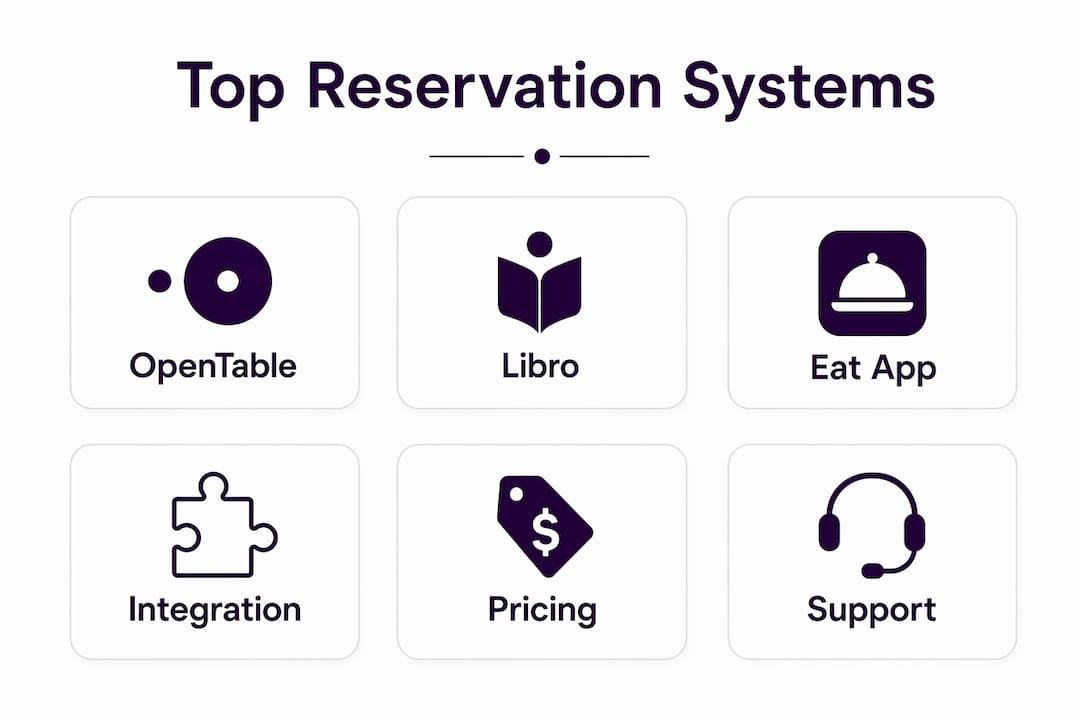
The strongest platforms available to Canadian restaurants right now are Libro, OpenTable, and Eat App. Each covers the core pillars: online booking, waitlist management, and guest CRM. The right choice depends on your volume, service style, and how deeply you want to connect your reservation data to your POS and marketing tools.
OpenTable seats more than 1.9 billion diners annually across its network, which gives it unmatched discovery reach for restaurants that want new guests finding them through the platform. Libro is the standout choice for Canadian operators who want to own their guest data outright and avoid commission fees on bookings. Eat App suits mid-volume restaurants that need a clean, affordable entry point with solid CRM features built in.
| Platform | Best for | Key features | Pricing model | Customer support | Integration capabilities |
|---|---|---|---|---|---|
| Libro | Canadian operators prioritizing data ownership | Online booking, waitlist, guest CRM, marketing tools | Monthly subscription, commission-free | Dedicated onboarding, email and phone | POS, loyalty, marketing platforms |
| OpenTable | High-traffic restaurants needing discovery reach | Multi-channel booking, automated reminders, analytics | Monthly fee plus per-cover charges | 24/7 support | 200+ integrations including POS |
| Eat App | Mid-volume restaurants on a budget | Online reservations, CRM, waitlist, floor management | Free tier available; paid plans for full features | Email and chat support | POS, Google, social media |

Libro's commission-free model is particularly relevant in Quebec, where operators are increasingly protective of their guest data. OpenTable's 200+ restaurant tool integrations give it an edge for complex, high-volume operations. Eat App's free entry tier lets smaller restaurants test a full table reservation system before committing to a paid plan.
How do Quebec restaurants actually use these platforms?
Quebec's restaurant scene is diverse enough that no single platform fits every operation. The four local examples below show how different service styles drive different software choices.
Bloom Sushi, a botanical vegan sushi restaurant, uses OpenTable to coordinate dine-in reservations alongside its Uber Eats delivery channel. The challenge for a restaurant like Bloom Sushi is keeping table availability accurate when off-premise orders are running simultaneously. A centralized booking view on desktop and mobile solves exactly that, freeing staff to focus on guests rather than reconciling two separate booking streams.
Café Krieghoff, a lively bistro with a popular terrace on avenue Cartier, runs a high-turnover service where real-time synchronization matters most. A busy Friday patio cannot afford a double-booking, and the restaurant's reservation setup reflects that priority. The system updates availability the moment a booking is confirmed, regardless of whether it came in by phone, online, or walk-in.
Table, the minimalist hotel eatery inside Hôtel PUR, operates across distinct dining zones: the main room, the bar, and private areas. Setting separate booking rules by zone prevents overbooking in any one section and lets the team manage a sophisticated wine-focused service without manual workarounds. This is exactly the scenario where a basic booking form fails and a full table management engine earns its keep.
Restaurant Ouroboros uses Libro's platform, which shows up directly in its booking URL. For a boutique market-cuisine restaurant focused on guest relationships and living wines, Libro's CRM tools and data-ownership model are a natural fit. The restaurant can build detailed guest profiles and run its own marketing without the platform claiming ownership of the diner data.
Pro Tip: Ask any platform vendor directly: "Who owns the guest data collected through your system?" If the answer is ambiguous, treat it as a red flag. Some platforms retain diner data for their own marketing, which limits your ability to run loyalty campaigns independently.
| Restaurant | System used | Key capability | Best for |
|---|---|---|---|
| Café Krieghoff | OpenTable | Real-time sync across channels | High-turnover bistros |
| Bloom Sushi | OpenTable | Dine-in and delivery coordination | Specialty restaurants |
| Table | Proprietary hotel system | Zone-based booking rules | Upscale hotel dining |
| Restaurant Ouroboros | Libro | Guest CRM and data ownership | Boutique dining |
How do you implement a reservation system without disrupting service?
Getting the software right is only half the job. The rollout itself is where most restaurants stumble.
Start by auditing your current booking flow before touching any software. Map every channel where reservations arrive: phone, walk-in, website, Google, social media. That map tells you which integrations are non-negotiable on day one versus which can wait. Skipping this step leads to gaps where bookings fall through during the transition.
Staff training needs to happen before go-live, not during a Friday dinner rush. Most platforms offer onboarding sessions; use them. The front-of-house team needs to feel confident with the floor management view, the waitlist function, and how to handle a walk-in when the system shows limited availability. Automating waitlists and guest communications frees staff to focus on hospitality rather than logistics, but only if they trust the tool.
Integration planning deserves its own conversation with your POS vendor. Confirm which data fields sync automatically and which require manual entry. A reservation system that connects with POS and marketing tools creates feedback loops that improve staffing decisions and promotional targeting over time.
Pro Tip: Run the new system in parallel with your existing booking method for the first two weeks. It adds a small administrative burden upfront but eliminates the risk of a lost reservation during the learning curve.
Common pitfalls to avoid:
- Choosing a platform based on price alone without verifying it supports your specific dining zones or service types
- Skipping the data export test: before signing, confirm you can pull your full guest list in a standard format
- Ignoring French-language support requirements, which matter for guest-facing communications in Quebec
- Assuming your POS integration is plug-and-play without confirming it with both vendors
What benefits go beyond just filling tables?
A dining reservation solution does more than prevent double-bookings. The CRM layer is where the real operational value accumulates.
Guest visit history and preference data collected through the system let your team personalise every interaction before the guest walks in. Spotting a returning guest, noting a dietary preference from a previous visit, or flagging a birthday automatically shifts the experience from transactional to memorable. That kind of personalisation builds loyalty and tends to increase average spend per visit.
Automated email and SMS reminders reduce no-shows without requiring any staff effort. The reminder goes out at a set interval before the reservation, and guests who cannot make it cancel rather than simply not showing up. Fewer empty tables means more predictable revenue on any given service.
Operational workflow improvements compound over time. When bookings from every channel land in one view, the host team makes faster seating decisions. Managers get accurate covers data for staffing and inventory planning. The administrative load that used to sit with a dedicated reservationist gets absorbed by the platform.
Pricing and support considerations
Pricing structures vary more than the marketing language suggests. OpenTable charges a monthly software fee plus a per-cover charge for diners who book through the OpenTable marketplace, which adds up quickly for high-volume restaurants. Libro's commission-free model means a predictable monthly cost regardless of how many covers you turn. Eat App's free tier covers basic reservations and CRM for smaller operations, with paid plans unlocking floor management and advanced analytics.
Professional onboarding and 24/7 customer support are common offerings across the major platforms, but response quality varies. Ask specifically about support during peak service hours, not just business hours. A system outage at 7:00 PM on a Saturday needs a faster response than a billing question on a Tuesday morning.
French-language support for guest-facing communications is a practical requirement for Quebec restaurants. Confirm that automated confirmation emails, SMS reminders, and the booking widget itself can be configured in French before committing to any platform.
What should you ask providers before signing?
The sales demo answers the questions the vendor wants you to ask. These are the ones that actually matter:
- Who owns the guest data collected through your platform, and can I export it in full at any time?
- Does your system support separate booking rules for different dining areas, such as a patio versus a private room?
- What happens to my reservations if I cancel my subscription?
- Which specific POS systems have you tested and confirmed as working integrations, not just listed as compatible?
- Is your guest-facing booking interface available in French?
- What is your average response time for support tickets during dinner service hours?
The data ownership question is the one most operators skip and later regret. Some platforms treat the diner relationship as platform property, which limits your marketing independence.
How long does implementation actually take?
A realistic timeline from contract signing to a fully operational system runs four to eight weeks for most independent restaurants. The first week covers account setup, staff access, and initial configuration. Weeks two and three involve connecting integrations, building out your floor plan in the system, and configuring booking rules by dining area. Week four is staff training and a parallel-run period where both the old and new systems operate simultaneously.
Full optimization, meaning your CRM is populated with meaningful guest data and your automated reminders are tuned to your no-show patterns, takes three to six months of live operation. The system gets more useful as the guest database grows.
Multi-location groups or restaurants with complex POS integrations should budget closer to eight to twelve weeks for the initial rollout.
Dexcoretechnologies: a different approach to missed reservations
If the platforms above handle the booking widget and floor plan well, they still leave one gap open: the phone. Guests who call during service, after hours, or when your host is occupied with a table often reach voicemail and book somewhere else instead.
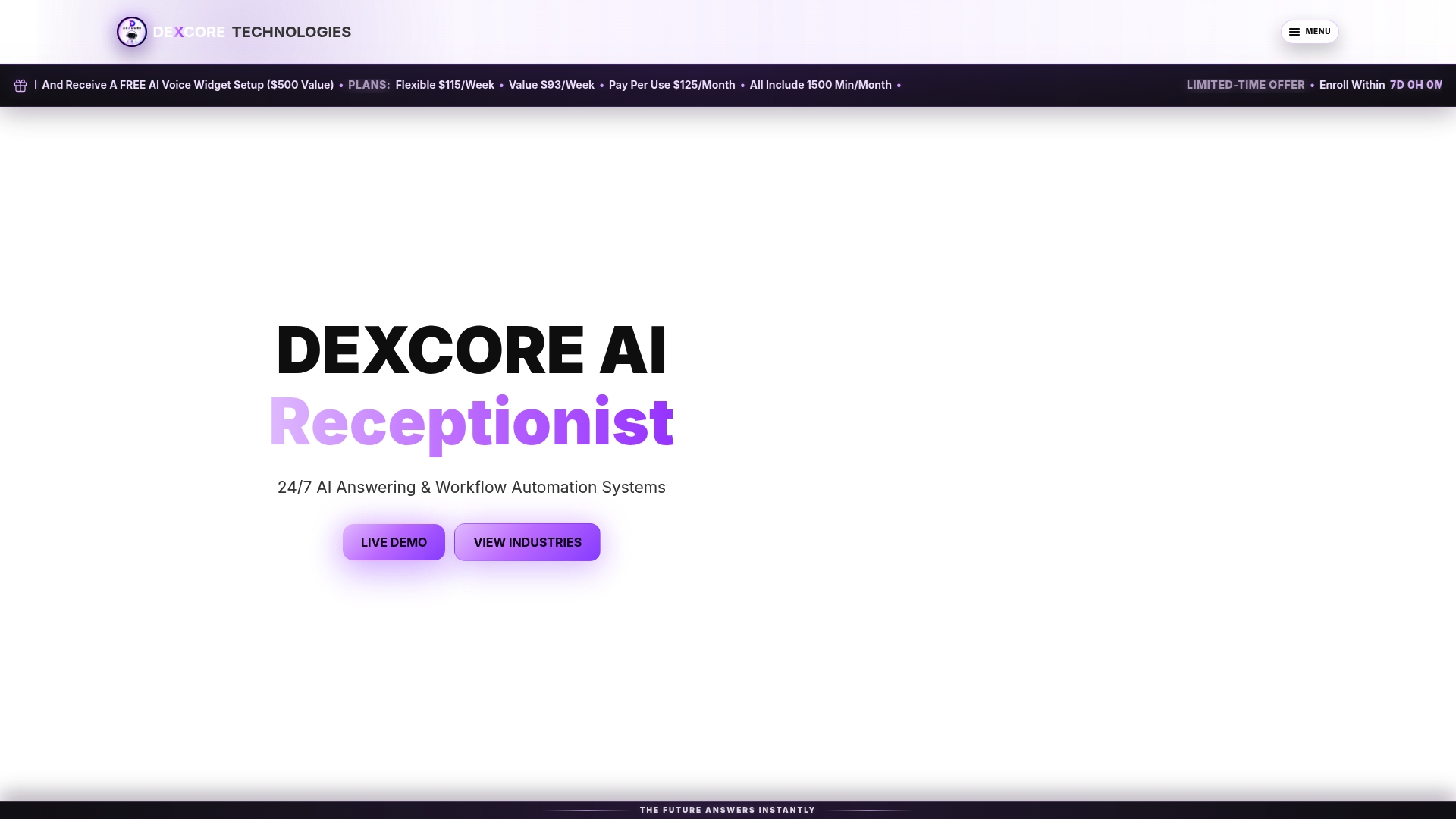
Dexcoretechnologies addresses that specific problem for Canadian restaurants. Its AI receptionist for restaurants answers inbound calls 24/7, captures reservation details, sends SMS confirmations, and routes the booking into your existing system without any staff involvement. It is not a replacement for OpenTable or Libro. It is the layer that catches what those platforms miss: the phone call that comes in at 9:30 PM when your team is in the weeds. For Quebec restaurants that want to stop losing bookings to unanswered calls without hiring additional front-of-house staff, Dexcoretechnologies offers a practical, subscription-based option worth evaluating alongside your reservation software choice.
Key takeaways
The right restaurant reservation management system for a Quebec restaurant depends on volume, data ownership priorities, and how deeply the platform connects to your existing tools.
| Point | Details |
|---|---|
| Platform fit by volume | OpenTable suits high-traffic venues; Libro fits operators who want commission-free, data-owned bookings. |
| Data ownership matters | Verify full guest data export rights before signing; some platforms retain diner data for their own use. |
| French-language support | Quebec restaurants must confirm guest-facing communications can be configured in French. |
| Implementation timeline | Most independent restaurants need four to eight weeks from contract to full operation. |
| Dexcoretechnologies | Covers the phone channel that reservation platforms miss, with 24/7 AI call answering and booking capture. |